Hollow core slabs – a high-return, low-carbon investment for modern construction
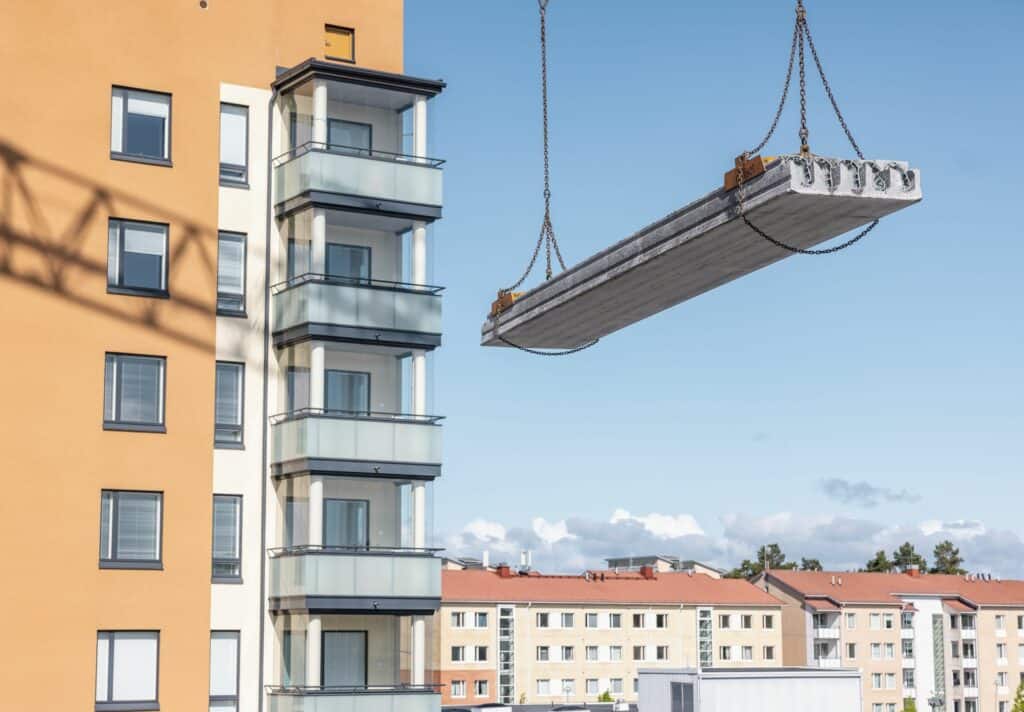
Precast hollow core slabs are among the most sustainable load‑bearing elements in modern construction. Their voided design uses significantly less concrete, while controlled factory production minimizes waste and optimizes material efficiency. This combination lowers embodied carbon and boosts resource responsibility – making hollow core slabs a smart choice for any project aiming to reduce its environmental footprint.
At the same time, the global construction sector continues to face persistent challenges: high material waste, labor shortages, and costly schedule delays. Industrialized precast production – and especially a dedicated hollow core production line – offers a practical, scalable answer. By investing in automated precast technology, companies can cut emissions, enhance productivity, and gain a competitive edge in delivering faster, greener, and more reliable building projects.
Let others enjoy this, too!
Material efficiency that reduces cost and carbon
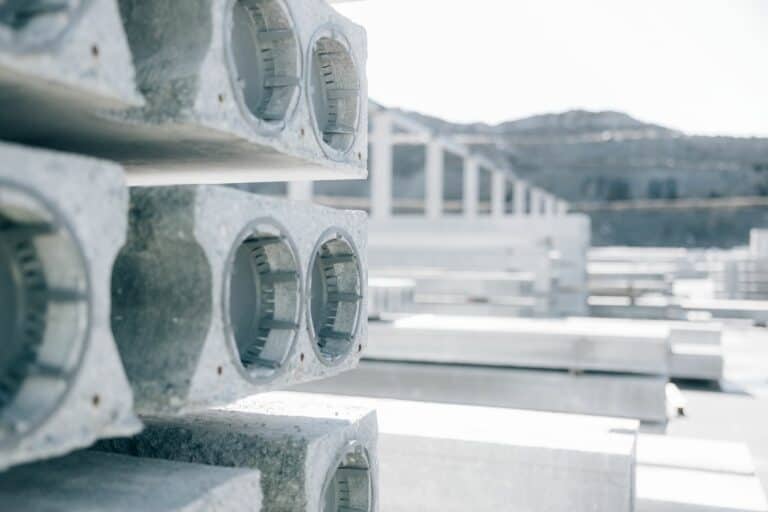
Hollow core slabs deliver exceptional material efficiency by removing concrete in areas where it does not contribute to structural performance. Their internal voids and production method reduce concrete consumption by up to 45% compared to traditional cast‑in‑situ slabs, directly lowering cement usage – the largest contributor to concrete’s carbon footprint.
By using high‑strength prestressing strands, hollow core slabs also achieve the same load‑bearing capacity with 20–30% less steel, further reducing both material costs and embodied carbon.
Sustainable production relies on optimized zero‑slump concrete with a typical cement content of about 300 kg/m³, enabling fast strength development and minimizing the overall carbon intensity of each slab.
Because more than 70% of concrete volume consists of aggregates that are typically sourced locally, transport emissions remain low while supporting local supply chains.
This combination of reduced cement, lower steel demand, efficient mix design, and local sourcing results in a product that is not only highly cost‑effective but also significantly more sustainable than cast-in-situ floor systems.
Through these combined efficiencies, precast construction lowers both the cost structure and the carbon footprint of building frames. As Product Director for Long Lines, Concrete, Stationary, Infra, Jani Eilola, summarizes, “Precast construction is one of the few solutions that simultaneously reduce embodied carbon, increase productivity, and improve the quality of our built environment. With optimized material use and factory‑controlled processes, we can build faster, greener, and with far greater reliability than traditional methods allow.”
Industrialized precast production: speed, predictability and quality
Industrialized precast production enhances sustainability not only by using fewer materials, but by transforming the construction process itself. The construction industry today suffers from 10% material waste, 30% rework, 40% unproductive on-site work, and widespread budget and schedule overruns – all of which result in wasted resources and avoidable carbon emissions.
Factory‑controlled production of hollow core slabs reduces these inefficiencies. Material waste drops to around 3-7%, compared to 5–10% on cast‑in‑situ sites, eliminating unnecessary cement, steel, and energy use.
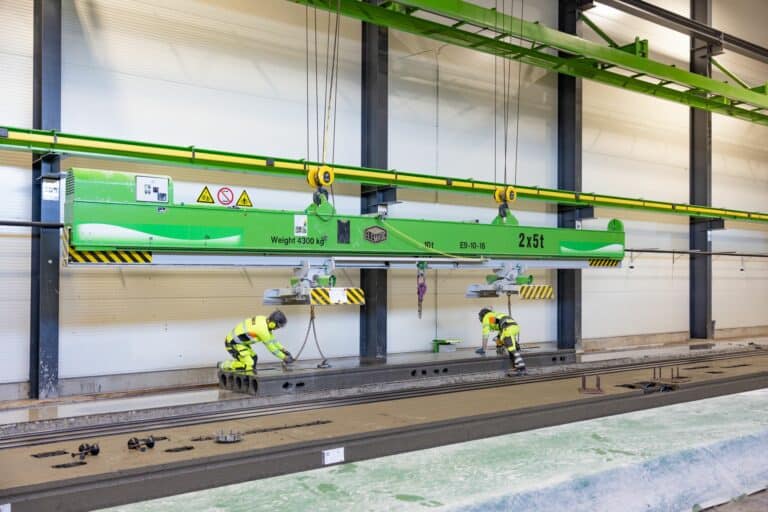
Automation ensures consistent quality and precision. Technologies such as the Elematic Extruder provide optimal compaction and dimensional accuracy, reducing the likelihood of rework – a hidden but significant contributor to construction’s carbon footprint.
Faster production and installation – reducing project timelines by up to 50% – also improve sustainability. Shorter construction periods mean fewer worker commutes, fewer temporary installations, and lower overall site energy use.
By relocating value‑adding activities from busy city centers to controlled factory environments, precast construction also reduces noise, dust, and traffic emissions, delivering environmental benefits to surrounding communities.
Strong environmental benefits supporting long-term ESG value
Hollow core slabs contribute to sustainability across the entire building lifecycle. Their optimized material use, high durability, and long service life reduce both embodied and operational carbon impacts.
Factory‑produced slabs offer reliable performance in fire resistance, acoustic properties, and structural longevity – attributes that lower maintenance needs and thereby reduce carbon expenditure over decades.
From a whole‑building perspective, focusing on low‑carbon hollow core slabs has a meaningful impact. Building frames account for 32% of total lifecycle emissions, and slabs represent 24% of that frame’s footprint. Improving performance in this category therefore delivers measurable progress toward ESG targets.
Hollow core slabs also naturally support circular construction principles. Their standardized geometry and demountable nature allow them to be removed and reused in new projects – a sustainability advantage not possible with cast‑in‑situ structures or filigree (half slab).
Hollow core slab production is one of the fastest-growing segments of modern construction, driven by urbanization, labor shortages, and the need for low-carbon building solutions. Precast production enables rapid construction, lower operating costs, and high material efficiency – all of which translate into strong project economics. Investing in a hollow core plant provides reliable cashflow, long-term market resilience, and alignment with the global shift toward industrialized, sustainable construction.
“Precast construction is one of the few solutions that simultaneously reduce embodied carbon, increase productivity, and improve the quality of our built environment. With optimized material use and factory‑controlled processes, we can build faster, greener, and with far greater reliability than traditional methods allow.”
Contact us now!
or