
New white paper: How precast solutions can lower carbon footprints and enhance sustainability in construction
As the cornerstone of the built environment, concrete is currently irreplaceable. Twice as much concrete is used in…
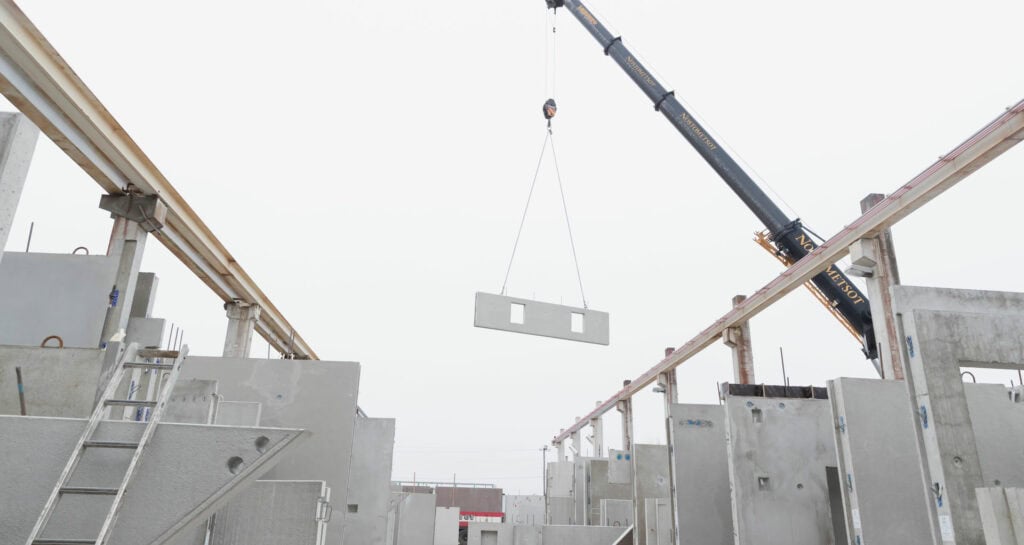
The sustainability value of precast wall panels is not just about reducing embodied carbon. It is about delivering lower lifecycle emissions through efficient manufacturing, energy performance, durability, and innovations such as CO₂ curing.
The environmental impact of a building is largely determined long before construction is finished. Material selection, manufacturing methods, and structural design all influence the carbon footprint of a building, making the building envelope a critical area for improvement.
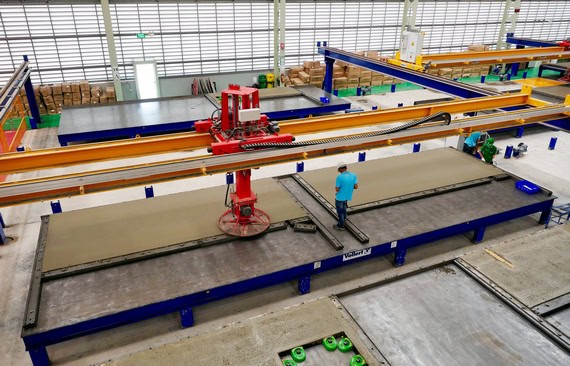
Precast wall panels are manufactured in controlled factory conditions where material use can be optimized and waste minimized. Precise production methods ensure that concrete, reinforcement, insulation, and embedded components are used efficiently, reducing unnecessary material consumption while maintaining structural performance. Unlike conventional cast-in-situ construction, factory production significantly reduces rework, material waste, and quality variations.
As sustainability requirements continue to tighten worldwide, the challenge is no longer a question of material selection alone. It is increasingly a question of how consistently and efficiently buildings can be produced. Industrialized precast production provides the process control required to reduce waste, improve quality, and implement new low-carbon technologies at scale, offering a practical pathway toward measurable environmental improvements.
While reducing embodied carbon is important, operational carbon throughout a building’s lifetime should not be forgotten.
Insulated precast sandwich wall panels contribute significantly to energy efficiency by providing excellent thermal performance. Their factory-integrated insulation and consistent quality help minimize thermal bridging and improve overall building envelope performance. This reduces the energy required for heating and cooling throughout the life of the building.
In warm climates, improved thermal insulation lowers cooling demand, helping reduce operational costs and energy consumption. In colder regions, the same insulation performance improves heat retention and indoor comfort. Concrete’s natural thermal mass further helps stabilize indoor temperatures by reducing temperature fluctuations.
As building regulations increasingly focus on lifecycle emissions, energy-efficient wall systems provide benefits that continue throughout the operational life of the building. The role of insulated sandwich walls in reducing heating and cooling demand is particularly evident in regions where climate conditions place high demands on building energy performance.
Read more about Insulated sandwich panels
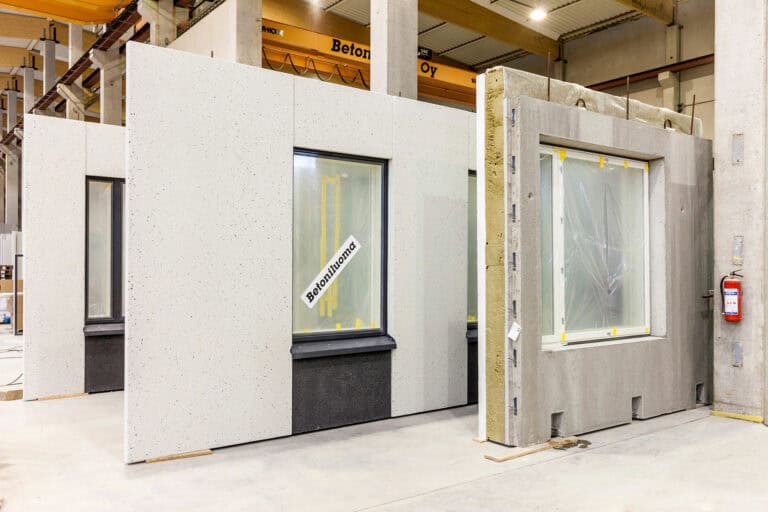
The most sustainable building material is often the one that does not need to be replaced. Precast concrete wall panels are designed for long service lives and minimal maintenance requirements. Concrete’s inherent fire resistance, weather durability, acoustic performance, and structural reliability contribute to lower lifecycle costs while reducing the environmental impacts associated with repair, replacement, and renovation. By extending building lifespan and reducing maintenance requirements, precast wall systems support both environmental and economic sustainability objectives.
Let others enjoy this, too!
One of the most promising sustainability developments in precast construction is the adoption of CO₂ curing technology. Developed by Elematic’s partner Carbonaide, the process permanently mineralizes captured CO₂ within concrete elements. Rather than being released into the atmosphere, carbon dioxide becomes part of the concrete structure itself, helping reduce embodied carbon while maintaining the performance characteristics required in precast production.
The technology can reduce cement consumption, enable the use of alternative binders, and improve early-strength development. At the same time, accelerated curing can improve production efficiency and support more efficient factory operations. Exact calculations are expected during 2026, but initial results from a Finnish precast factory have shown promising potential.
Emerging technologies such as CO₂ curing demonstrate why production technology matters. New low-carbon solutions can only achieve meaningful impact when they can be implemented reliably and at an industrial scale. This is where advanced wall production systems play a critical role, enabling precasters to adopt innovations without compromising productivity, quality, or profitability. The wall production solutions of Elematic and Vollert Precast Solutions enable the implementation of CO₂ curing technology in industrial precast wall manufacturing.
“Advanced wall manufacturing technologies make low-carbon construction practical. By combining industrialized production, material efficiency, and innovations such as CO₂ curing, we can help the industry build faster, more predictably, and with a significantly smaller environmental footprint.” – Toni Koitmaa, Product Director, Circulation
As regulators, developers, and investors place greater emphasis on lifecycle performance, the industry’s focus is shifting toward construction methods that can deliver consistent, measurable results at scale.
Precast wall systems support these goals through optimized material use, energy-efficient building envelopes, and long-term durability. When combined with industrialized production, they offer a practical approach to reducing lifecycle emissions while meeting the demands of modern construction.
As sustainability requirements continue to evolve, the ability to manufacture high-performance wall panels efficiently, consistently, and at scale will become an increasingly important competitive advantage for precasters.
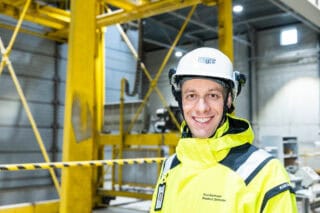
Advanced wall manufacturing technologies make low-carbon construction practical. By combining industrialized production, material efficiency, and innovations such as CO₂ curing, we can help the industry build faster, more predictably, and with a significantly smaller environmental footprint.
As the cornerstone of the built environment, concrete is currently irreplaceable. Twice as much concrete is used in…

This innovative CO₂-curing solution offers a scalable way to improve the cost, speed, and quality of precast…
or